Organized Train Travel: How to Choose Well
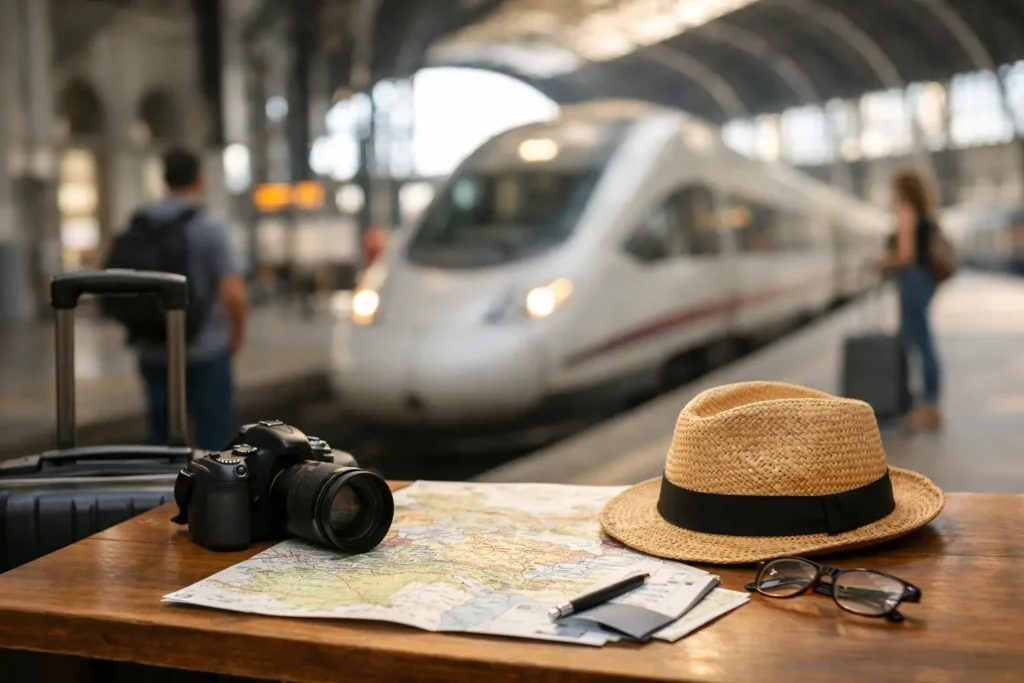
There is a huge difference between chaining together tickets, hotels, and schedules on your own and embarking on a trip that is already designed to truly work. Organized train travel is not just about booking routes: it is about weaving together times, connections, accommodations, and pacing so that traveling is comfortable, logical, and much more sustainable.
For many people, the train represents exactly what the airplane has been losing on European routes: useful time, less friction, and a real sense of travel. You leave from the center, arrive at the center, avoid much of the waiting, and, furthermore, reduce your environmental impact without giving up comfort. But for that experience to be a good one, organization matters much more than it seems.
Why organized train travel makes more and more sense
It is not a trend. It is a practical response to several needs at once. On the one hand, there is the environmental issue. Those who want to travel with fewer emissions find the railway to be a much more coherent alternative for traveling around Spain and a large part of Europe. On the other hand, there is comfort. The train allows you to read, work, look at the landscape, or simply rest, something difficult to match in other means of transport.
There is also a factor that carries a lot of weight and is sometimes overlooked: mental time. Organizing a multi-city route may seem simple on paper, but in practice, it requires checking schedules, realistic margins for connections, correct stations, luggage policies, nights needed at each stop, and well-located accommodations. When all of this is handled professionally, the trip changes completely.
What good organized train trips should include
Not all itineraries are equally well thought out. Sometimes something is sold as “organized” that is actually just a quick sum of bookings. A good train trip needs coherence, not just availability.
A realistic pace
One of the most common mistakes is trying to fit too many cities into a few days. On the map it sounds tempting, but your body feels differently. Changing accommodation every night turns a potentially pleasant trip into a race. That is why spending at least two nights in each destination usually works better. It allows you to arrive without rushing, get your bearings, enjoy the city, and make the train add to the experience rather than exhaust you.
Well-measured connections
It is not enough for a connection to exist. It has to be reasonable. A well-designed itinerary leaves room for platform changes, minor delays, and realistic arrival times, especially in large stations or on international routes. That is one of the big differences between an automated search and human planning.
Accommodations that fit the route
Sleeping near the station is not always ideal, but sleeping in a poorly located spot does not help either. The important thing is to find responsible, comfortable accommodations that are well connected to the city. If they have also been genuinely reviewed and not chosen just for the price, the trip gains in peace of mind.
Human support before and during the trip
When something changes, having someone to call makes all the difference. A personal manager who knows your route, your schedules, and your needs resolves issues much better than a chain of automated messages. On this kind of trip, companionship and support are not an extra. They are part of the value.
Who organized train travel is for
The idea that the train is only for backpackers or travelers with a lot of time is no longer valid. Today, it is a great fit for couples looking for a carefully planned getaway, families who prefer to avoid airports, cultural travelers who want to explore several cities at a leisurely pace, and people who value sustainability without giving up a good bed or clear logistics.
It is also a very solid option for schools, associations, and companies. When a group needs security, structure, and a single point of contact, the train offers clear advantages. Less fragmentation in travel, easier coordination, and a more orderly experience from departure to return.
Train routes that work especially well
There are itineraries that, due to their connections, frequency, and travel experience, fit especially well into an organized format. Spain offers very comfortable combinations to link cities with their own identity and reasonable travel times. Italy is also a very rewarding country for this type of route, as it allows you to combine culture, gastronomy, and heritage without depending on a car.
In Europe, some multi-city routes work very well when designed thoughtfully. It is not about crossing half a continent in a week, but about linking compatible destinations. A well-planned route between three or four cities can offer a much richer experience than a frantic tour with six stops.
That said, it is worth being honest here: not all areas are equally easy by train. There are countries with excellent networks and others where connections require more care. That is why it is worth designing each trip according to the season, the type of traveler, and the goal of the journey, instead of applying a standard route to everyone.
Sustainability yes, but without turning the trip into a sacrifice
Sometimes sustainable travel is communicated as if it means sacrificing comfort. It doesn’t have to. Choosing the train can reduce emissions and, at the same time, improve the experience. The point is doing it right.
A truly sustainable itinerary is not limited to transport. It is also influenced by how accommodations are chosen, how much time is spent in each place, and which suppliers are worked with. Opting for longer stays at each stop not only reduces unnecessary transfers. It also fosters a more respectful relationship with the destination and a less superficial experience.
From this perspective, sustainability ceases to be a label and becomes a practical way to travel better. More unhurried, more conscious, and, in many cases, much more pleasant.
How to know if an agency is doing it right
If you are comparing options, there are fairly clear signs. The first is whether they listen to you before proposing a route. A couple looking for rest does not travel the same way as a family with children or a company that needs logistical precision. When the proposal arrives too quickly and seems the same for everyone, it is best to be suspicious.
The second sign is transparency. They should explain to you what the trip includes, what the transfer times between trains are like, why each stop was chosen, and what level of support you will have if something unexpected arises. Trust is not born from generic promises, but from concrete details.
The third is real knowledge of the product. At EcoJourney Spain, we work precisely from there: routes designed one by one, reviewed accommodations, reliable suppliers, and human support that accompanies you before, during, and after the trip. Because organizing well is not just booking. It is anticipating.
When it pays off more than organizing it yourself
There are travelers perfectly capable of planning their own route, and that is fine. But even in those cases, there are scenarios where an organized trip adds a lot of value. If you are going to combine multiple countries, if you do not want to waste hours comparing connections, if you are looking for responsible accommodations that are already filtered, or if you simply prefer to travel with the peace of mind of having backup, it usually pays off.
It also pays off when vacation time is limited. If you have eight or ten days, every mistake weighs more heavily. A bad connection, a night in an uncomfortable area, or a poorly calculated journey can quite ruin the whole experience. On the other hand, when the route is well resolved from the start, you make the most of each day.
And then there is the invisible factor: enjoying the process. There are people who enjoy designing every detail. Others prefer to dedicate that energy to imagining the trip, not fighting with twenty open tabs. Neither option is better in the abstract. It depends on how you want to experience the preparation as well.
The best train trip is not the one that fits in the most destinations
It is usually the one that gives you space to just be. To have breakfast without looking at the clock, to walk around a city without feeling like you are running late, to look out the window and notice that moving around is part of the journey. That is where organized train trips make a difference when well planned: they turn logistics into calm.
If you are drawn to traveling in a more comfortable, more sustainable, and better-accompanied way, it is worth starting with a simple question: not how many places you want to see, but how you want to feel while you explore them.
Pingback: Well-Thought-Out Cultural Tours of Egypt - EcoJourney
Pingback: Responsible Tourism Guide to Europe - EcoJourney