Sustainable Tourism Trends 2026
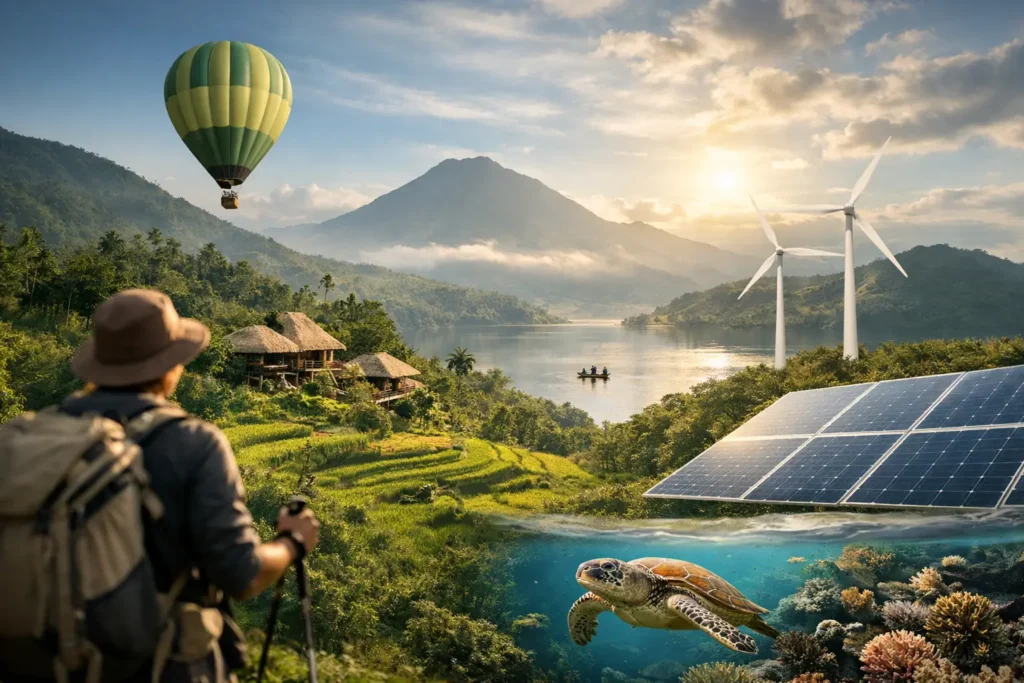
Booking a trip in 2026 is no longer just about choosing a destination and dates. For an increasing number of travelers, the real question is different: how to move better, where to stay with good judgment, and what kind of experience is truly worth the time and money invested. Sustainable tourism trends for 2026 point in exactly that direction: less rushing, more meaning, and more conscious decisions without sacrificing comfort.
What is interesting is that sustainability is no longer perceived as a moral extra or a complicated option. It is entering the realm of the practical. Those who travel want to reduce their impact, yes, but they also want to avoid absurd routes, impersonal accommodations, and saturated destinations. And that is where 2026 marks a clear change: the good trip will, increasingly, be the best-planned trip.
Sustainable Tourism Trends for 2026 That Will Actually Influence How We Travel
The first major trend is the rise of the train as a real alternative in Europe. We are not just talking about an ecological choice. We are talking about comfort, better-utilized time, and a way to connect cities without going through airports, long waits, and draining transfers. For many travelers, especially couples, families, and cultural profiles, the train is no longer a rarity: it is a logical way to travel when the itinerary is well designed.
However, not every journey fits the same way. There are routes where the train is clearly superior and others where it is advisable to combine modes of transport or accept that travel time will be longer. The key is not to fall into rigid sustainability, but to build coherent trips. An itinerary with several stops and stays of at least two nights usually reduces fatigue, improves the experience, and avoids that feeling of crossing off places without having really lived them.
The second trend is the advance of true slow travel, not just as an empty label. People may travel fewer times a year in some cases, but they will travel better. More time at each destination, fewer hotel changes, and a deeper relationship with the place. This has a positive effect on the trip’s footprint, but also on its quality. When one stays longer, they better understand the local rhythm, consume differently, and leave more value in the destination’s economy.
There will also be growing demand for responsible accommodations vetted with judgment. Travelers are no longer satisfied with a generic statement about recycling or saving water. They want to know if the accommodation works with local suppliers, if it cares for employment, if it avoids wasteful practices, and if its commitment is real. In 2026, we will see more questions and less blind faith in green marketing.
Less Volume, More Traceability
Another sustainable tourism trend for 2026 will be the need for traceability. The client wants to understand what they are buying. It is not enough to put the word “sustainable” in a brochure. Concrete decisions will be needed: low-emission transport, accommodations selected for responsible practices, excursions with reliable local operators, and travel paces that do not force unnecessary consumption.
This point is especially important because the traveler is better informed. They know that not everything is worth the same. A hotel can have certifications and, at the same time, be integrated into a tourism model that is not very respectful of the environment. A safari might seem responsible on paper and not be so in practice. A cultural route might promise authenticity while pushing local communities to perform an artificial version of themselves. In 2026, the difference will be in the prior selection work.
That is why agencies and teams that know the suppliers directly, have tested accommodations, and can explain why one option is better than another gain value. Useful sustainability cannot be improvised. It requires human judgment, context, and follow-up.
The End of Uncomfortable Sustainable Tourism
For years, many people associated traveling responsibly with constant compromises: worse journeys, less comfortable hotels, or more complex organization. That idea is becoming outdated. One of the great keys of 2026 is that sustainability will increasingly be integrated into well-resolved, comfortable trips with a high level of attention.
This is especially noticeable in the traveler profile who wants to do it right, but doesn’t have time to coordinate connections, review every accommodation’s policies, or distinguish between reliable proposals and pure greenwashing. For that audience, paying for serious planning is not a whim. It is peace of mind. And that peace of mind includes having a logical route, a person who responds, and a trip designed to be enjoyed, not to spend time fixing unforeseen events.
At this point, personalized accompaniment will be decisive. In a market full of automation, the value of speaking with someone who knows the destination, understands your priorities, and adjusts the trip to your pace will be ever-increasing. Not everyone needs the same route, even if they share environmental sensitivity. A family, a couple looking for scenic trains, or a company organizing a responsible trip for their team have different needs. Addressing those nuances well will be a clear competitive advantage.
Less Saturated Destinations and Experiences More Connected to the Place
Another strong trend will be the redistribution of interest. Travelers will continue to want to see iconic places, but with more attention to when, how, and from where. Sleeping in secondary cities, combining large capitals with villages or natural areas, and choosing less pressured seasons will be more common decisions.
This does not mean giving up popular destinations, but experiencing them more intelligently. Visiting Italy, for example, does not require chaining three cities in four days. You can build a slower route, with train segments and enough time for each stop to make sense. The same will happen with Spain and many European itineraries where the charm is not just in the icon, but in everything that happens between one point and the next.
Outside of Europe, there will also be growing interest in responsible experiences in destinations of high natural and cultural value, provided they are well planned. In countries like Egypt or Tanzania, sustainability cannot be reduced to a label. It depends heavily on the local operator, the size of the groups, respect for the territory’s rhythms, and how the trip impacts the area’s economy. There, the nuance matters much more than the rhetoric.
What to Look For If You Want to Apply These Trends to Your Next Trip
If you are thinking about traveling in 2026, it is worth looking beyond the initial price. A trip that is cheap on paper can be expensive in terms of lost time, poorly matched transfers, or poor experiences. Conversely, a well-designed proposal usually makes better use of every day and significantly reduces wear and tear.
Start with the pace. If a route changes cities constantly, it might not be as sustainable or as enjoyable as it seems. Then look at the transportation. When the train fits, it usually offers a very solid combination of low emissions, comfort, and a real connection with the territory. Also check the accommodations: not so much for aesthetics, but for their way of operating and their relationship with the environment.
And, above all, ask who is behind it. Who has selected that route? Who responds if something changes? Who really knows the suppliers? At EcoJourney Spain, we defend precisely that way of working: well-organized sustainable trips, with personal attention from beginning to end and suppliers vetted on the ground, because taking care of the planet makes more sense when it also allows you to travel better.
What 2026 Makes Clear
The trends for this year are not about complicating your life to be more consistent. They are about choosing better. Fewer senseless journeys, less mass tourism, fewer blind decisions. More time at each place, higher quality in planning, and more trust in those who prepare the trip with you.
There will be those who continue to seek the express getaway and the lowest price at any cost. But more and more people are going to prefer something else: a trip with less impact, yes, but also more comfortable, more human, and better thought out. And when that happens, sustainability stops feeling like an obligation. It starts to seem like what it really is: a much more intelligent way to travel.
If 2026 confirms anything, it is this: the future of tourism is not in moving more, but in moving with better judgment.
Pingback: Cheap Mediterranean cruise: what to look for - EcoJourney