Cheap Mediterranean cruise: what to look for
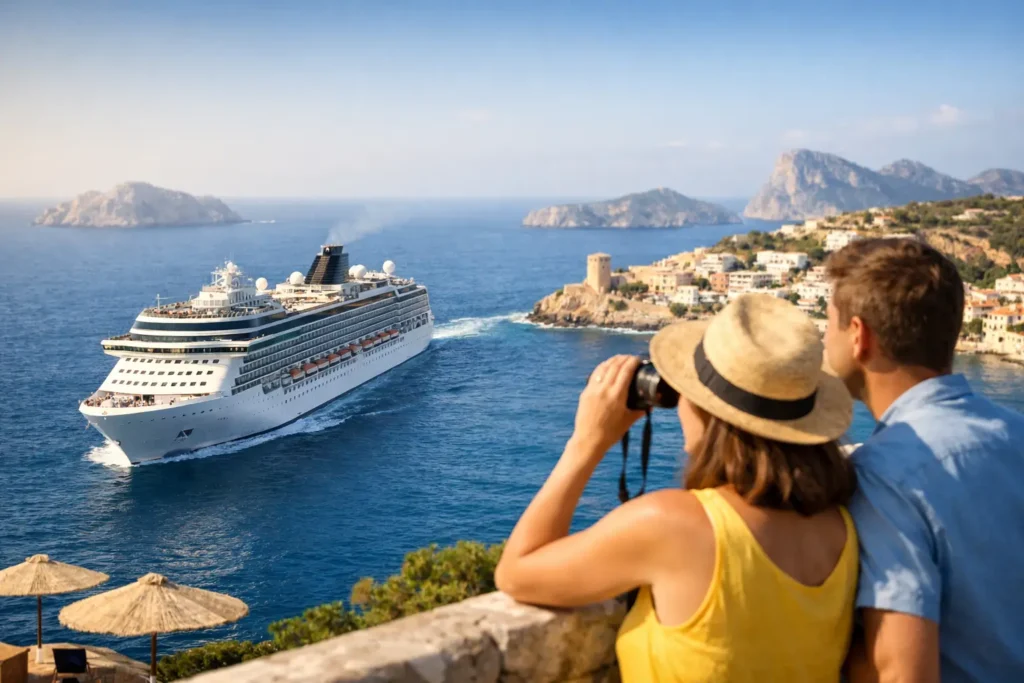
There is a huge difference between finding a cheap Mediterranean cruise and finding one that is truly worth it. The starting price may seem tempting, but when you look at transfers, taxes, drinks, excursions, and the actual time in each port, you are not always looking at the most convenient option. And if you also care about traveling with a bit more meaning, it’s worth refining even further.
The Mediterranean works very well for comparison because it concentrates popular routes, a lot of competition, and ports that are very different from each other. That means there are offers, yes, but also hasty decisions. Our experience with travelers who prioritize comfort, organization, and a more contained impact tells us the same thing over and over again: cheap is only worth it when it fits your way of traveling.
What a cheap Mediterranean cruise really means
When a cruise line advertises very low prices, it is usually showing the base fare per person, in double occupancy, and for interior cabins. There is no catch, but it’s not the whole picture either. In many cases, it’s missing port taxes, mandatory gratuities, beverage packages, Wi-Fi, port transfers, and excursions if you don’t want to improvise at every stop.
Therefore, rather than looking for the lowest price, it is advisable to calculate the total cost. A seven-night cruise that seems unbeatable can end up costing significantly more than one that is slightly more expensive on paper but has better schedules, easier boarding, and fewer inevitable extras. The useful question is not just how much you pay, but what you get in return and how much time you actually enjoy the trip.
The type of traveler also plays a role. For a flexible couple, an interior cabin and a weekday departure can be a great buy. For a family or someone who truly wants to rest, a saturated itinerary and a massive ship can be exhausting, even if the initial figure is attractive.
Where the best deals usually are
The most economical routes usually appear in three scenarios. The first is the shoulder season, especially May, early June, September, and a few weeks in October. The weather is usually nice, there are fewer crowds, and prices drop compared to July and August.
The second scenario is departure ports with a lot of competition, such as Barcelona, Valencia, or Civitavecchia. With more supply, it’s easier to find real promotions. Furthermore, if you depart from Spain or arrive comfortably by train, you can significantly reduce the overall cost and avoid a short flight that adds expense and pollutes more than it seems.
The third is bookings made well in advance or, on the opposite end, last-minute deals. This depends on your profile. If you need a family cabin, specific schedules, or some peace of mind, booking ahead is usually better. Last-minute deals can work if you have total flexibility, but they don’t always allow for good choices or planning comfortable connections.
How to spot if a deal is worth it
A good filter is to look at the itinerary calmly. There are very cheap routes that link attractive stops on paper, but with arrivals that are too late or departures that are too early. If you dock at 1:00 PM and set sail at 7:00 PM, you have barely stepped foot in the city. And if you depend on an organized excursion to see it, the budget goes up again.
Another important detail is the actual port. Sometimes a stop is sold as if you were in a major Mediterranean city, when in reality you dock quite far away and need a transfer. That doesn’t mean it’s a bad option, but you should factor it into your decision from the beginning.
Also, look at what the fare includes. Some cruise lines compensate for a low base price with highly predictable later charges. Others offer all-inclusive packages that, while not strictly cheap, help control spending. For many travelers, paying a bit more and knowing what the whole thing will cost generates much more peace of mind than chasing fragmented deals.
Cheap Mediterranean cruise and sustainability: a necessary conversation
Let’s not sugarcoat it: cruising is not the lightest form of travel regarding its environmental footprint. If your main priority is to reduce emissions, there are usually better alternatives, especially combining train, ferry, and multi-night stays. However, there are also travelers who want to consider this option and do it in a more conscious way.
In that case, there are decisions that make a difference. The first is avoiding unnecessary flights to reach the port, especially when you can depart from Spain or connect comfortably by train. The second is choosing itineraries that don’t turn the trip into a race of express stops. Spending more time in fewer places is usually better for you and also reduces that feeling of rapid consumption of the destination.
The third has to do with how you spend on land. Prioritizing local suppliers, eating outside the most crowded circuits, and not chaining together invasive excursions helps make the economic impact more balanced. Sustainability does not only depend on the means of transport. The way you are in each place also influences it.
Which routes are usually more worthwhile
If you are looking for a balance between price, accessibility, and experience, Western routes are usually the most reasonable. Itineraries departing from Barcelona or Valencia with stops in Marseille, Genoa, La Spezia, Naples, or Palermo usually move in competitive ranges and are relatively easy to manage from Spain.
Routes through the Greek Islands or the Adriatic can be very attractive, but they often involve flights or more delicate connections if you are departing from here. Sometimes the cruise isn’t expensive, but the whole package is. And if the goal is to travel stress-free, it is wise to look at the big picture.
For families, seven-night routes with a few long stops and intermediate sailing usually work well. For couples or cultural travelers, a smaller ship or an itinerary with fewer ports might be worthwhile, even if the base price goes up slightly. You pay more, yes, but often you gain in peace of mind, real time, and the feeling of traveling.
Common booking mistakes
The first is comparing only the price per night. A ship may seem cheaper and yet force you to spend significantly more on board. The second is not checking embarkation and disembarkation times. If the arrival logistics at the port are bad, the experience suffers from the start.
Fatigue is also underestimated. There are very intense itineraries that seem profitable because they visit many cities, but leave little room to rest. If you view the trip as a disconnection and not as a checklist of places, perhaps less quantity and more time would suit you better.
Another common mistake is choosing August out of inertia. It is the most obvious option for many families, but also the most expensive and crowded. If you can shift your dates even slightly, the change is usually very noticeable in price and quality of the experience.
When a cheap cruise isn’t the best option
There are profiles for which it simply doesn’t fit. If you like to explore a city calmly, sleep at least two nights at each stop, and connect with the place beyond a quick photo, a cruise will probably fall short for you. In that case, a Mediterranean route by train and ferry can give you a much richer experience, with a lower footprint and without giving up comfort.
It may also not be the best idea if you highly value gastronomic or cultural authenticity. On a cruise, much of the experience happens inside the ship, which functions almost like a destination itself. That’s not bad, but it is different from a trip focused on the territory.
That’s why, at EcoJourney Spain, we advocate something very simple: first you define how you want to travel, and then you choose the format, not the other way around. Sometimes a cruise fits. Other times, a well-designed overland route brings much more value for a similar budget.
How to decide wisely before booking
If you are considering a cheap Mediterranean cruise, think about three things. The first is your actual budget, not the advertised price. The second is how much effective time you will have in each destination. The third is whether that pace of travel truly resembles what you enjoy.
If the answers are clear, deciding will be easier. And if they aren’t, it’s worth pausing for a moment. Because a well-chosen trip is not the cheapest or the showiest, but the one that leaves you with the feeling of having used your time, money, and energy in a way that is consistent with you.
The Mediterranean remains one of the best areas in Europe to travel well, with sea, culture, and cities full of history at reasonable distances. It is worth exploring unhurriedly and wisely, even when the budget rules.