Well-Thought-Out Cultural Tours of Egypt
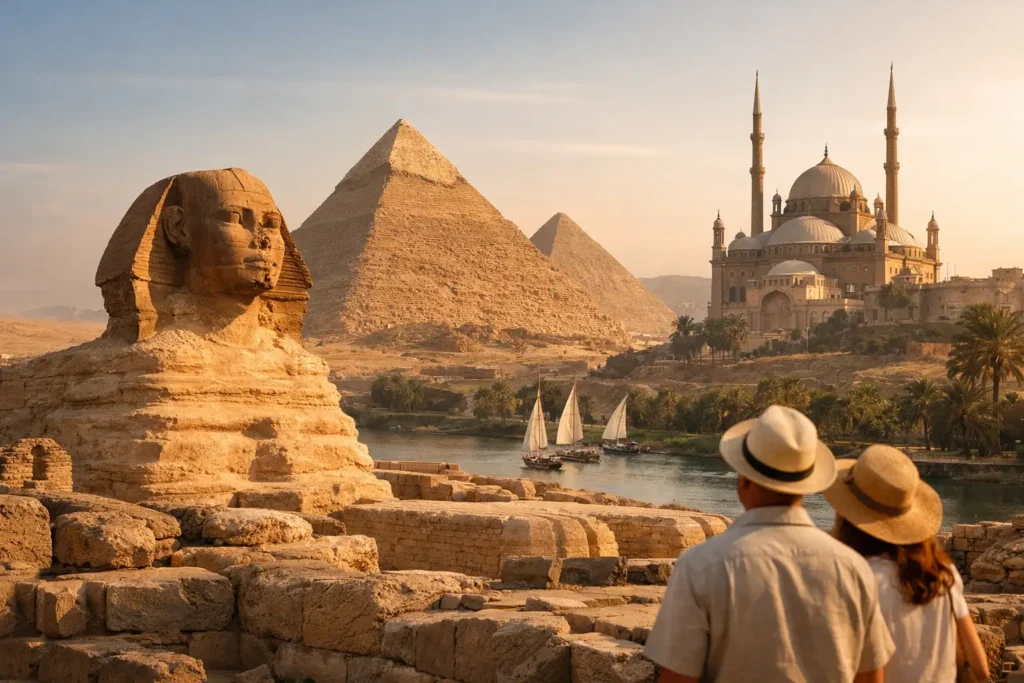
There is a big difference between seeing Egypt and understanding it a bit. The best cultural tours in Egypt are not the ones that chain temples together at top speed, but those that leave room to look, listen, and place each site in its context. When the trip is well planned, Luxor is not just a photo in front of a colonnade, and Cairo is not reduced to an express excursion through traffic and pyramids.
Egypt remains one of those destinations that many people have dreamed of for years, but also one that generates the most doubts when organizing it. Which route to choose, how many days to dedicate to each stop, whether it is better to take a cruise or travel by road, how to avoid an exhausting or overly touristy trip. That is where a well-designed tour makes the difference, especially if you are also looking for a more responsible way to travel, with vetted accommodations and trusted local partners.
What Makes Cultural Tours in Egypt Good
A good cultural tour is not about cramming many famous names into the itinerary. It is about organizing the trip logically, reducing unnecessary transfers, and giving real time to the places that deserve it. Egypt has immense monuments, yes, but also intense rhythms, demanding temperatures, and distances that should be managed wisely.
That is why a well-thought-out cultural route usually opts for fewer hotel changes and more nights at each stop. Spending at least two nights in key cities allows you to rest, visit without rushing, and experience the destination in a different way. It also makes it easier to integrate experiences that are often left out of fast-paced programs, such as walking through Cairo’s historic neighborhoods, understanding the Nile’s role in daily life, or chatting with local guides who truly know the terrain.
The other key is the balance between the essential and the authentic. The pyramids of Giza, Karnak, the Valley of the Kings, or Abu Simbel must be included if it is your first trip. But not everything should revolve around the icons. Egypt gains a lot when Pharaonic heritage, Islamic heritage, contemporary life, and moments of pause are combined.
The Classic Route That Works Best
If you are looking for a first approach, the combination of Cairo, Luxor, and Aswan remains the most complete. It is not a cliché by chance. It is the route that best summarizes different layers of Egyptian history and allows you to travel in a fairly natural sequence.
Cairo deserves more time than it usually gets. Many people arrive thinking only of the pyramids and the museum, and leave surprised by the value of its historic center, its mosques, its markets, and that chaotic mix that, when well guided, is fascinating. It is advisable to spend at least three nights here. Less time usually feels like too little and forces you to compress visits too much.
Luxor is another point where it is worth staying. It is easy to fall into the temptation of seeing it as a one-day stop and moving on. However, when you sleep there for two or three nights, everything changes. You can spread the visits between the East and West banks, enter the temples with less rush, and better understand the scale of ancient Egypt. Karnak, for example, is not enjoyed in the same way when it is part of a marathon day.
Aswan introduces a different pace. Calmer, friendlier, and with a very visible relationship with the Nile. From here you can consider whether to include Abu Simbel, a visit that is highly impressive but requires a long journey. It is worth it for many travelers, although it does not always make up for it if the total trip is short or if you prefer to avoid very early mornings.
Cruise, Road, or a Combination
In cultural tours in Egypt, this decision significantly influences the final experience. The Nile cruise remains a popular option between Luxor and Aswan because it resolves logistics comfortably and allows you to see several temples without changing your suitcase every day. For those who value hassle-free travel, it can be a great fit.
However, not all cruises offer the same quality or the same pace. Some are too focused on volume and rigid schedules. If you are looking for a calmer cultural experience, you should carefully select the boat category, the group size, and the type of program. A cruise can be very pleasant or turn into a succession of rushed visits.
The road, on the other hand, offers more flexibility and can allow for a more direct relationship with the territory, but it also requires long journeys and solid organization. For certain travelers, especially families or people who prioritize comfort, the best option is usually a combination: internal flights on some stretches and a well-put-together local land tour on others.
There is no single formula. It depends on the days available, the budget, and the type of trip you want to take. The important thing is that the route does not feel like an endurance race.
How to Travel with More Meaning and Less Impact
Talking about sustainability in Egypt is not about promising the impossible. Not everything can be done by train, nor do all infrastructures meet the same environmental standards as in Europe. But much better decisions can be made than those of conventional tourism.
The first is simple: lengthen the stay a bit and reduce the number of stops. The fewer unnecessary transfers, the better for the trip’s impact and also for your rest. The second is to choose reliable local suppliers, with clear conditions and a real relationship with the destination. This helps ensure a larger part of the spending stays in the local economy and avoids impersonal chains that treat the trip as a standard product.
Where you sleep and how you visit also matter. A responsible accommodation does not have to be rustic or uncomfortable. In fact, more and more travelers are looking for exactly the opposite: hotels of a good standard, well-located, and with more careful practices regarding water consumption, waste management, or local employment. Well-understood sustainability does not subtract quality. It organizes it better.
In an agency like EcoJourney Spain, this approach makes sense precisely because it is not presented as a sacrifice, but as a smarter way to travel. Human support, a real selection of partners, and routes designed so that the trip truly works.
How Many Days You Need to Avoid Rushing
If you only have a week, the most prudent thing is to concentrate on two main bases and accept that you won’t see everything. Cairo plus Luxor can be an excellent combination for a first contact. Adding Aswan in that timeframe is possible, but it requires threading the needle very finely and accepting more intense days.
With nine or ten days, the experience improves quite a bit. You can now include Cairo, Luxor, and Aswan with a more comfortable logic, even adding Abu Simbel if you are very interested. From twelve days onwards, the tour gains depth and allows you to incorporate rest days, less obvious visits, or an extension to the Red Sea if you want to end the trip with a few quieter days.
It is worth being honest here. Seeing more does not always mean traveling better. There are heavily loaded itineraries that look impressive on paper and then leave a feeling of exhaustion. In a cultural destination as powerful as Egypt, stopping is also part of the journey.
Who These Tours Fit Best
This type of route works especially well for couples, families with somewhat older children, cultural groups, schools, and also companies looking for an organized trip with solid content and clear logistics. Egypt is a rewarding destination when everything is coordinated, but it can become an uphill battle if every transfer, ticket, or hotel change is left to chance.
Those who value comfort without giving up an authentic experience usually enjoy a tailor-made or semi-tailor-made tour much more than a closed, massive one. Having a single point of contact, support before and during the trip, and planning designed around your schedule greatly reduces stress. And in such an intense destination, that makes a difference.
It is also a good option for travelers who want to consume tourism more consciously. It is not about seeking impossible purity, but about making better decisions: reasonably sized groups, more time in each place, local hiring, and a less superficial outlook.
Common Mistakes When Choosing Cultural Tours in Egypt
The first is getting carried away only by the price. A very cheap tour often cuts corners on actual time spent, the quality of visits, the category of services, or the experience of the local team. In the end, what seemed like savings can translate into fatigue, improvisation, and the feeling of always being in a rush.
The second mistake is trying to cover too much. Egypt is imposing, and it is easy to think that you might not return and must see everything at once. But a saturated itinerary usually prevents exactly what makes this destination special: understanding the places, not just crossing them off a list.
The third is not taking the climate and personal pace into account. There are travelers who tolerate early mornings, heat, and long transfers well, and others who do not. Adjusting the route to that is not a minor detail. It is the difference between enjoying and surviving the program.
If you are thinking about Egypt, it is worth asking for a route designed with good judgment, human pacing, and a reliable local base. Because this country does not need you to rush through it. It needs you to give it enough attention so that the journey stays with you even after you return home.
Pingback: Gut durchdachte Kulturreisen durch Ägypten