Well-Planned Eco-Friendly Trips in Europe
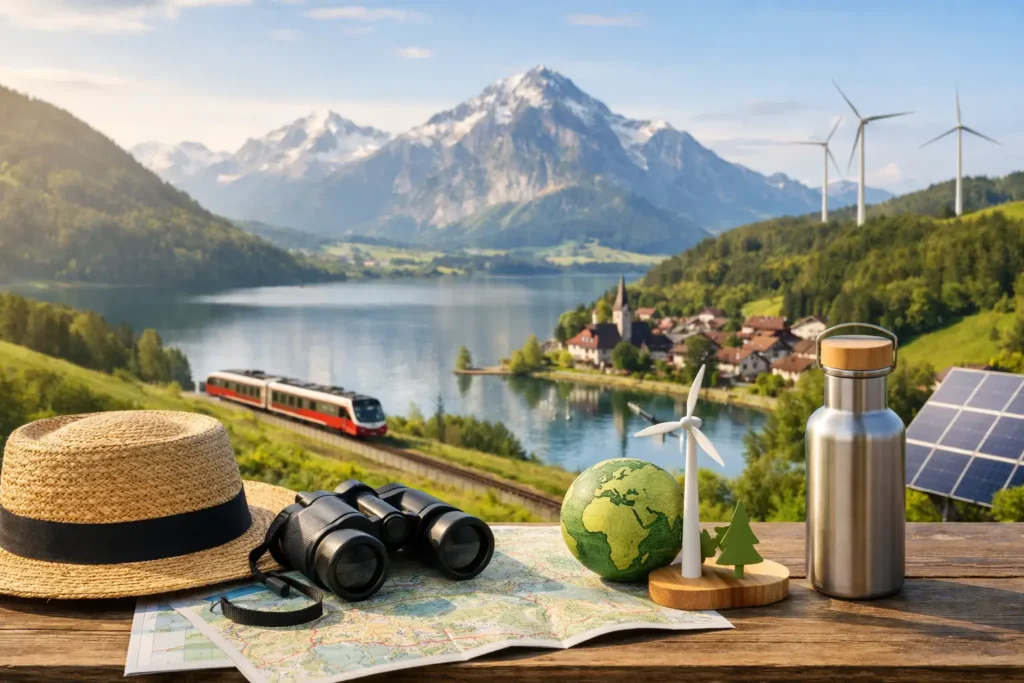
There is a big difference between wanting to travel more sustainably and actually making the trip work well. When someone looks for eco-friendly trips in Europe, they almost always want the same thing: to reduce their impact without giving up comfort, well-spent time, and the peace of mind of having a coherent route. And that is where you can tell if a trip is well thought out or only looks sustainable on paper.
What Really Makes Eco-Friendly Trips in Europe Sustainable
A trip doesn’t become eco-friendly just by avoiding a flight. Transport matters a lot, of course, but the pace of the itinerary, the type of accommodation, local consumption, and the way you interact with the local economy also count. In Europe, where the railway network makes it quite easy to link cities and countries, sustainability works best when the whole experience is designed, not just a single journey.
That is why it makes sense to opt for train routes with stays of at least two nights at each stop. This approach reduces unnecessary transfers, avoids the feeling of always being in a rush, and allows you to get to know each place better. Furthermore, a trip with fewer hotel changes is usually more comfortable, especially for couples, families, or people who value clear organization.
Where you sleep also has a big influence. A responsible accommodation doesn’t have to be complicated or austere. It can be a hotel with good energy management, local suppliers, real waste reduction policies, and a more respectful integration with the environment. The key is to select places that truly deliver, not just those that use pretty labels.
The Train is Not Just an Alternative to the Airplane
For years, many people have seen the train as the slowest option. Sometimes it is, and we must be honest about that. If someone wants to spend a two-day weekend on the other side of the continent, flying will probably still seem more practical. But when we talk about trips of a week, ten days, or more, the train completely changes the experience.
It’s not just about emissions. Traveling by train allows you to arrive in the city center, avoid dead time at airports, and turn the journey into part of the trip. There is less friction and more continuity. This is very noticeable on routes through Italy, France, Switzerland, Germany, or combined connections from Spain.
Furthermore, the train fits especially well with a more conscious way of traveling. You see how the landscape changes, you better understand the distances, and you don’t jump from one place to another as if all destinations were interchangeable. That more human pace makes the trip go further, even if you make fewer stops on paper.
How to Plan a Sustainable Itinerary Without Complicating Your Life
This is where one of the biggest mistakes appears: thinking that an eco-friendly trip requires hours and hours of searching, comparison sites, impossible connections, and constant sacrifices. It doesn’t have to. Well-resolved sustainability is practical.
The first thing is to define the logic of the route. It makes sense to connect cities that are close or well-linked by train, instead of chasing a list of scattered places. Madrid, Barcelona, Lyon, Milan, and Florence, for example, form a much more natural sequence than an improvised combination of distant destinations with no direct connection.
Then it is advisable to adjust the number of stops to the actual time available. The more cities you squeeze into a few days, the less sustainable and less enjoyable the trip becomes. Constantly changing accommodation increases the consumption associated with mobility and reduces immersion time. Instead, staying two or three nights in each destination allows you to discover neighborhoods, markets, museums, and restaurants without the pressure of having to pack your suitcase again the next day.
The third point is coordination. An eco-friendly trip in Europe needs reasonable connections, compatible schedules, and enough margin between journeys. Improvisation can work on a simple getaway, but on a multi-country route, it is much safer to work with an itinerary reviewed by someone who knows the real options well.
Comfort and Sustainability Can Indeed Go Together
There is this idea that traveling responsibly implies accepting discomfort. In some cases, there will be small compromises, of course. The journey might take a little longer or a perfect direct connection might not exist. But that doesn’t mean traveling worse.
In fact, many people discover exactly the opposite. A good train seat, carefully selected hotels, arrivals in the center, and a rush-free itinerary significantly improve the experience. Comfort is not at odds with environmental awareness. What changes is the way you prioritize.
Having a realistic design also helps. You don’t need to turn every decision into an exhausting moral exercise. It’s about reducing your carbon footprint where it has the most impact, choosing responsible suppliers, and avoiding rushed tourism that wears down both the traveler and the destinations. When done this way, the trip is more balanced and more pleasant.
Routes That Work Especially Well
There are countries and combinations that fit this approach very well. Italy is one of the clearest cases. Cities like Turin, Milan, Verona, Bologna, Florence, or Rome allow you to create fluid train routes, with reasonable times and plenty of cultural content. It is easy to design a slow and comfortable trip without needing to take internal flights.
Central Europe also offers very solid options. Vienna, Salzburg, Munich, Innsbruck, or Zurich can be linked in an attractive route for those looking for landscapes, heritage, and good infrastructure. On these routes, the train is not a compromise solution, but the most logical way to travel.
For those leaving from Spain, it is worth carefully considering the entry point. Sometimes it pays to start in a specific, well-connected city and build a coherent trip from there. Other times, the best option is a closer and less ambitious route, but better utilized. The longest itinerary doesn’t always win. Often, the one that is best thought out wins.
The Value of Working with Vetted Suppliers
In sustainability, there is a lot of talk and quite a bit of confusion. That is why it matters so much to know who is behind each part of the trip. Booking random accommodations is not the same as doing it with a verified selection, where someone has checked standards, location, comfort, and responsible practices.
The same goes for activities and services at the destination. Collaborating with reliable local suppliers helps to better distribute the economic impact of the trip and usually improves the traveler’s experience. You notice it in the treatment, the authenticity, and the ability to resolve issues if anything unexpected comes up.
For many people, this part makes the difference between a nice trip in theory and a truly well-supported trip. At EcoJourney Spain, we work this way precisely for that reason: we don’t sell an abstract idea of sustainability, but concrete, comfortable itineraries vetted with real human attention.
Who This Type of Trip Makes the Most Sense For
Eco-friendly trips in Europe usually fit very well for couples who want a well-cared-for getaway, families who prefer to reduce logistical stress, and cultural travelers who enjoy the experience more when they are not rushing. They are also a very suitable option for companies, schools, or organizations that need a single point of contact and serious planning.
You don’t need to be an expert in sustainability or give up comfort to choose this model. You just have to want to travel more responsibly and be clear that time spent at the destination is worth more than collecting stamps on a map. That mindset is increasingly present among travelers looking for quality, meaning, and peace of mind in equal measure.
What You Should Be Clear About Before Deciding
There is something that deserves an honest look: the perfect trip does not exist. Sometimes you will have to choose between the shortest route and the lowest emission option. Or between a very central hotel and another with more consistent responsible practices. The key is not to find an impossible purity, but to make good overall decisions.
If the itinerary is well put together, the result is usually very positive. A smaller footprint, more real time in each place, better connections, and a more restful experience. And, above all, the feeling that traveling is still a pleasure, not a contradiction to what you want to care for.
Europe offers excellent conditions to do it right. The difference lies in not improvising a patchwork route, but building a trip that makes sense from the first train to the last night. When that happens, traveling sustainably stops being an effort and simply becomes a better way to move around the world.
Pingback: Responsible Tourism Guide to Europe - EcoJourney