Best ethical safaris in Tanzania
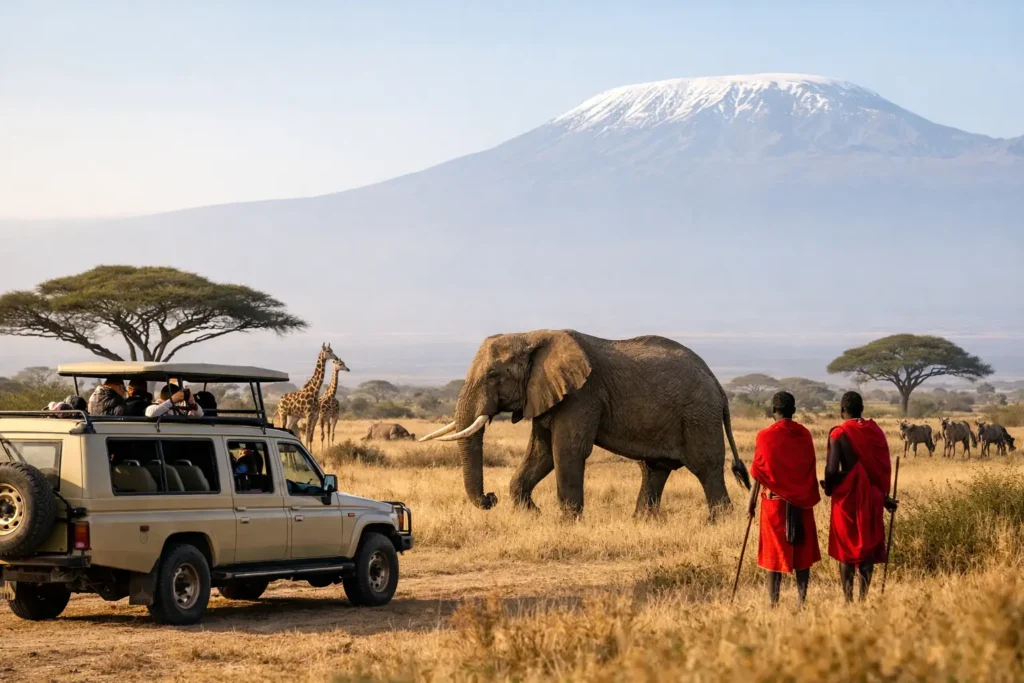
There is a huge difference between seeing animals and truly traveling to Tanzania. On the best ethical safaris in Tanzania, the experience is not measured only by how many lions you see or by a photo in the Serengeti, but by how the trip is organized, who benefits from it, and what impact it leaves when you depart.
For many travelers from Spain, the problem is not a lack of options, but exactly the opposite. There are too many proposals sold as sustainable without explaining what is behind them. And in a destination as sensitive as Tanzania, that difference matters. An ethical safari does not have to be uncomfortable, basic, or complicated. Well planned, it can offer high quality, a good pace of travel, carefully selected accommodations, and a more honest relationship with the territory and the people who live there.
What we mean by the best ethical safaris in Tanzania
Calling a safari ethical shouldn’t be a commercial ornament. For it to be truly ethical, there are several elements worth looking at carefully. The first is the treatment of wildlife. That means guides who respect distances, vehicles that do not block animals to force sightings, and a clear philosophy of observation, not pursuit.
The second point is the impact on local communities. A responsible safari works with well-paid local guides, drivers, accommodations, and teams. It also avoids turning cultural visits into a tourist show. When a route includes encounters with Maasai communities or other local groups, it must be done with context, respect, and real benefit for those who host the travelers.
The third criterion is how the itinerary is built. The best trips are not the ones that cram many parks into a few days, but those that leave enough time in each area, reduce unnecessary transfers, and allow for a calmer experience. That approach, besides being more comfortable, is usually more consistent with a less extractive way of traveling.
How to recognize a responsible safari without getting carried away by marketing
There are pretty clear signs. One of them is transparency. If an agency or operator doesn’t explain who provides the service at the destination, what type of accommodations they use, or how they manage cultural visits, it’s worth asking more questions. When the project is serious, those answers exist and are given naturally.
It also helps to look at the size of the trip. Small groups or well-designed private itineraries tend to have a more controlled impact and a much more pleasant experience. It doesn’t always mean traveling better by definition, because it also depends on the group’s behavior and the quality of the guide, but it does usually facilitate a more respectful kind of tourism.
Another important clue is the pace. A safari with constant hotel changes, marathon days, and too many kilometers may seem profitable on paper, but in practice, it exhausts the traveler and increases pressure on the environment. On the other hand, spending at least two nights at various stages allows you to get to know each area better and reduces that feeling of rapid consumption of the destination.
The parks where the best ethical safaris in Tanzania are usually found
There is no single perfect park. It depends on what you are looking for, the time of year, and the type of trip you want to make. Even so, there are areas that usually fit very well into a responsible approach.
Serengeti, when done with good judgment
The Serengeti is one of Africa’s great icons and, precisely because of that, it can also suffer more tourist pressure. The key here is not to avoid it at all costs, but to choose operators who do not turn every sighting into a race. A good safari in the Serengeti prioritizes sensible schedules, experienced drivers, and accommodations that are well integrated into the environment.
It is a fantastic option if you are looking for abundant wildlife and open landscapes, but it is worth assuming that at certain times there will be more vehicles. If absolute exclusivity is essential for you, perhaps it should be combined with other less crowded areas.
Tarangire, a very balanced alternative
Tarangire is usually one of the best surprises of the trip. It has large populations of elephants, impressive baobabs, and, in many cases, a greater sense of calm than other more famous parks. For an ethical safari, it fits very well because it allows excellent observation without the same intensity of vehicle traffic seen in other areas.
Furthermore, it is a good stop on a relaxed route through northern Tanzania. Well combined with other reserves, it brings variety without forcing a rushed trip.
Ngorongoro, spectacular but with nuances
The Ngorongoro Crater offers a wildlife density that is hard to match. It is an extraordinary place, but also one of those spaces where the balance between conservation and tourism demands a lot of attention. Therefore, it is especially important here to choose a respectful operation and not treat the visit as a simple express descent just to cross off a famous site.
It is worth it for the landscape and the quality of the sightings, although it usually works better as part of a broader route rather than as the sole argument for the trip.
Ruaha and Nyerere, for those seeking fewer crowds
If the traveler prioritizes a quieter experience and is willing to step off the most classic circuit, southern Tanzania can be a very interesting option. Ruaha and Nyerere offer safaris with lower tourist density and a feeling of greater isolation. They are not always the best choice for a first time, because the logistics can be somewhat more complex, but for certain profiles, they are very rewarding.
Here the ethical component can be reinforced by less tourist pressure, although that does not exempt you from carefully reviewing the quality of the operator and the accommodation.
The role of accommodation in an ethical safari
The lodge or camp is not a minor detail. A safari can have a very beautiful responsible discourse and fail right there. It is advisable to look for accommodations with serious water, waste, and energy consumption management, but also with real local employment and decent conditions for their team.
However, sustainability does not mean mandatory austerity. There are very comfortable, well-designed options with excellent service that work responsibly. The goal is not to give up comfort, but to choose it better. For many travelers, this point is decisive because they want to take a special trip without falling into excesses disconnected from the environment.
What kind of traveler enjoys this approach the most
An ethical safari usually fits especially well with couples, families, and travelers who do not want to feel like they are consuming a destination at top speed. It also works very well for those who value clear organization, prior guidance, and the peace of mind of knowing there are vetted suppliers behind it.
In our experience, this type of trip is of great interest to people who have already changed certain priorities when traveling. They prefer less improvisation and more judgment. They want authenticity, yes, but not at the expense of comfort or safety. And they understand that paying for a better-thought-out operation is not an unnecessary luxury, but a more meaningful way to travel.
What to ask before booking one of the best ethical safaris in Tanzania
There are simple questions that help a lot. It is useful to know who operates at the destination, how many real nights are spent in each area, what size the vehicles are, how cultural visits are approached, and what policy the guide follows during sightings. It is also worth asking about specific accommodations, not just their category.
If the answers are vague or too promotional, it’s a bad sign. When the trip is well built, it can be explained in detail and without beating around the bush. That’s where human advice makes a difference. Not to sell more, but to adjust the route to the type of experience you are really looking for.
EcoJourney Spain works on this type of trip with trusted local collaborators in Tanzania, precisely so that sustainability does not remain just a discourse and the traveler is backed by comfortable, clear, and well-supported planning.
An ethical safari is not perfect, but it is more honest
It should also be said like this. There is no such thing as a zero-impact trip to Tanzania, let alone a safari. There are long journeys, resource consumption, and an inevitable footprint. The point is not to pretend that this doesn’t exist, but to reduce it as much as possible and make more conscious decisions in every part of the route.
That is why the best ethical safaris in Tanzania are not those that promise absolute purity, but those that do things better: less rush, better local partners, more respect for wildlife, and an idea of travel that leaves value in the destination. If you are going on a safari, make sure it is also worthwhile for the place that welcomes you.